

A City of Boston Inclusionary Development Unit is what many home buyers still call an income-restricted home created through Boston’s old Inclusionary Development Policy, or IDP. Today, Boston’s newer term is Inclusionary Zoning.
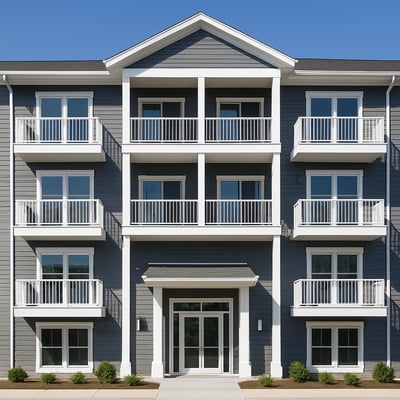 Since October 1, 2024, new filings are subject to zoning rules requiring certain market-rate housing developments to help create income-restricted housing. In plain English, the program is designed to make some homes in Boston available to income-eligible households at below-market prices or rents.
How does the program work?
Inclusionary Zoning applies to market-rate residential developments with seven or more units. The City lowered the trigger from 10 units to seven units and increased the required income-restricted share from 13 percent to 17 percent, and then to 20 percent, depending on the project.
In some cases, instead of creating affordable units on-site, developers may contribute to the City’s housing fund to support income-restricted housing elsewhere in Boston.
What is the Boston Planning Department’s (formerly BPDA) role pertaining to Inclusionary Zoning?
The Boston Planning Department (formerly the BPDA/BRA) is the municipal agency, established in 2024, responsible for city planning, zoning, development review, and urban design. The Boston Planning & Development Agency (BPDA) was transformed into the Boston Planning Department, placing it directly under City Hall oversight to improve accountability.
The Boston Planning Department helps shape and approve projects, while the Mayor’s Office of Housing handles much of the day-to-day housing administration and implementation of housing programs.
What does this mean for Boston home-buying consumers?
For home buyers, an inclusionary unit can be a path into Boston homeownership that might otherwise be out of reach; however, it is not the same as buying a market-rate condo. These homes come with income rules, asset limits, resale controls, owner-occupancy rules, and deed restrictions intended to preserve affordability for future home buyers as well.
The restrictions are usually attached to or referenced in the deed and typically last 50 years from the date the unit was created.
Who qualifies for a Boston income-restricted unit?
In general, a household (as opposed to an individual) qualifies if its income falls at or below the limit for that specific unit, based on Area Median Income, or AMI, and adjusted for household size. Each unit is assigned an AMI category, and household income is calculated using the estimated annual gross income of household members age 18 and older. Gross income can include wages, bonuses, commissions, gig income, cash benefits, and most gifts received by the household.
The City of Boston also applies asset limits. The City says the cap is generally $75,000 for households applying to units at or below 80 percent of AMI and $100,000 for households applying to units above 80 percent of AMI. The limit can be as high as $250,000 for households where all members are age 65 or older, or where all income comes solely from retirement and or disability benefits.
For ownership units, applicants must show long-term legal residency in the United States. Common lottery preferences include Boston residency, a household size of at least one person per bedroom, and a first-time homebuyer preference for homeownership units.
For Boston’s program, a first-time homebuyer means someone who has never owned a residential property.
How do prospective home buyers secure an income-restricted unit?
Usually, they do it through Metrolist, Boston’s central search tool for income-restricted housing. Most income-restricted homes are filled through a housing lottery, though not every listing works that way. Some may be handled through a waitlist or another application method listed on the property page.
How do home buyers apply for a Boston inclusionary unit?
Home buyers should start with the listing on Metrolist. The individual property page explains how to apply and links to the application materials. The application includes basic contact information and more detailed information about household income. After the application is submitted, eligible applicants are notified of the lottery date and time.
How does the lottery work for income-restricted housing?
The lottery for income-restricted housing is overseen by the Affirmative Fair Housing Marketing Program, part of the Mayor’s Office of Housing. Applicants are randomly assigned a lottery number, but that number is not the final ranking.
 After the drawing, the City sorts applicants using applicable preferences, such as Boston residency or first-time homebuyer status. Then, prospective home buyers are selected in ranked order to view available units, and others may be placed on a waitlist.
Boston also posts lottery results online using anonymous numbers so applicants can track their place in line.
Does winning the lottery guarantee the income-restricted home?
No. Applicants selected through the lottery still must pass a full eligibility screening. The marketing agent reviews financial documents and sends the file to Housing Compliance for review. The City of Boston’s final review usually takes one to two weeks after the City receives a complete file.
What happens after you buy an income-restricted Boston condo?
The biggest rule is simple: you must live in it as your principal residence. Inclusionary ownership units must be owner-occupied at all times. Other household members may come and go, but the owner must keep the condo as the primary home and may not rent out part of it.
If an owner’s income rises after purchase, the owner does not have to move out or keep meeting the original income limit.
What happens when a homeowner sells an income-restricted Boston inclusionary unit?
The owner of an income-restricted Boston inclusionary unit can usually sell the condo, but not as easily as a market-rate condo. The homeowner must first notify Housing Compliance by submitting a Notice of Intent to Sell or a similar letter. The owner is generally responsible for finding the buyer, and the buyer must be approved as eligible under the program. The City does not market the resale unit for the seller.
The sale price is also restricted. Resales are not subject to the annual price limits that apply to newly created units. Instead, each home has a Maximum Resale Price, or MRP, based on a formula in that unit’s deed restriction. The formula is usually based on the original purchase price, compounded at about 3 percent to 5 percent annually, with possible additions for approved capital improvements.
That maximum is a ceiling, not a guaranteed sale price.
Can an owner refinance an income-restricted Boston inclusionary unit?
Usually, yes, but not automatically. Homeowners must contact the City of Boston’s Housing Compliance before refinancing or taking on other new debt, such as a home equity line of credit, or HELOC.
The City often must provide a mortgage subordination and a certificate confirming the refinance complies with the deed restrictions and stating the unit’s current maximum resale price.
Owners may typically refinance up to 95 percent of the maximum resale price.
Can the homeowner rent an income-restricted Boston inclusionary condo unit?
No. Boston’s guidance is direct on this point. Homeowners may not rent all or part of the unit for any length of time, including through short-term rental platforms such as Airbnb. If the owner moves out, Boston says the unit must remain owner-occupied, meaning the owner generally needs to sell it rather than convert it to a rental. Violations of the prohibition against renting can trigger enforcement, including a forced sale of a unit.
Can the homeowner pass the condo to a relative or add someone to the deed?
Not freely. Adding or removing a person from the deed of an income-restricted unit is a change of ownership, and inclusionary restrictions require procedures for all such transfers. For example, if an owner wants to add a spouse to the deed, both parties must generally be approved as eligible under the program, unless the City grants a discretionary waiver tied to a change in family structure, such as marriage.
There are also rules for divorce-related deed changes. A transfer to a relative should not be treated like a normal private transfer without City review.
Does owning an income-restricted Boston inclusionary unit limit wealth building?
Yes, owning an income-restricted Boston inclusionary unit limits wealth building, at least compared with unrestricted homeownership in a strong, long-term housing market. Resale rules cap how much an owner can receive at sale, so homeowners generally do not capture the full upside of a rising market. Shared-equity homeownership can be described this way: resale is restricted to limit the appreciation the owner may realize, so the home stays affordable for the next home buyer. That does not mean there is no wealth-building value. Research has found that shared-equity and deed-restricted models can still help households build wealth through mortgage principal paydown and a limited share of appreciation, while also preserving affordability for future homebuyers. In other words, an income-restricted Boston condo is usually a more modest wealth-building tool than a market-rate condominium, but it may still be a meaningful path to equity and long-term housing stability for homebuyers who otherwise could not get into the Boston market at all.
Bottom line: Is a Boston inclusionary unit worth considering?
For some home buyers, yes, it is worth considering a Boston income-restricted, inclusionary unit. A City of Boston inclusionary unit can open the door to homeownership in a high-cost market. But home buyers should go in with their eyes wide open. These homes are not investment properties. They are owner-occupied, resale-restricted homes designed to stay affordable over time.
That trade-off can make them a practical option for households seeking stability and a foothold in Boston, even if the upside is lower than that of a traditional market-rate purchase.
These income-restricted condominium homes are not for all first-time home buyers. An experienced exclusive buyer agent can provide straightforward advice regarding your home-buying options.